Guide · Florentine food
Florentine food: a guide to the typical dishes and where to eat them
Steak, ribollita, pappa al pomodoro, crostini: Florentine cooking is made of few ingredients and a lot of patience. Here is what to eat in Florence, where the typical dishes come from and where to try them in a real trattoria, even if you are coeliac.
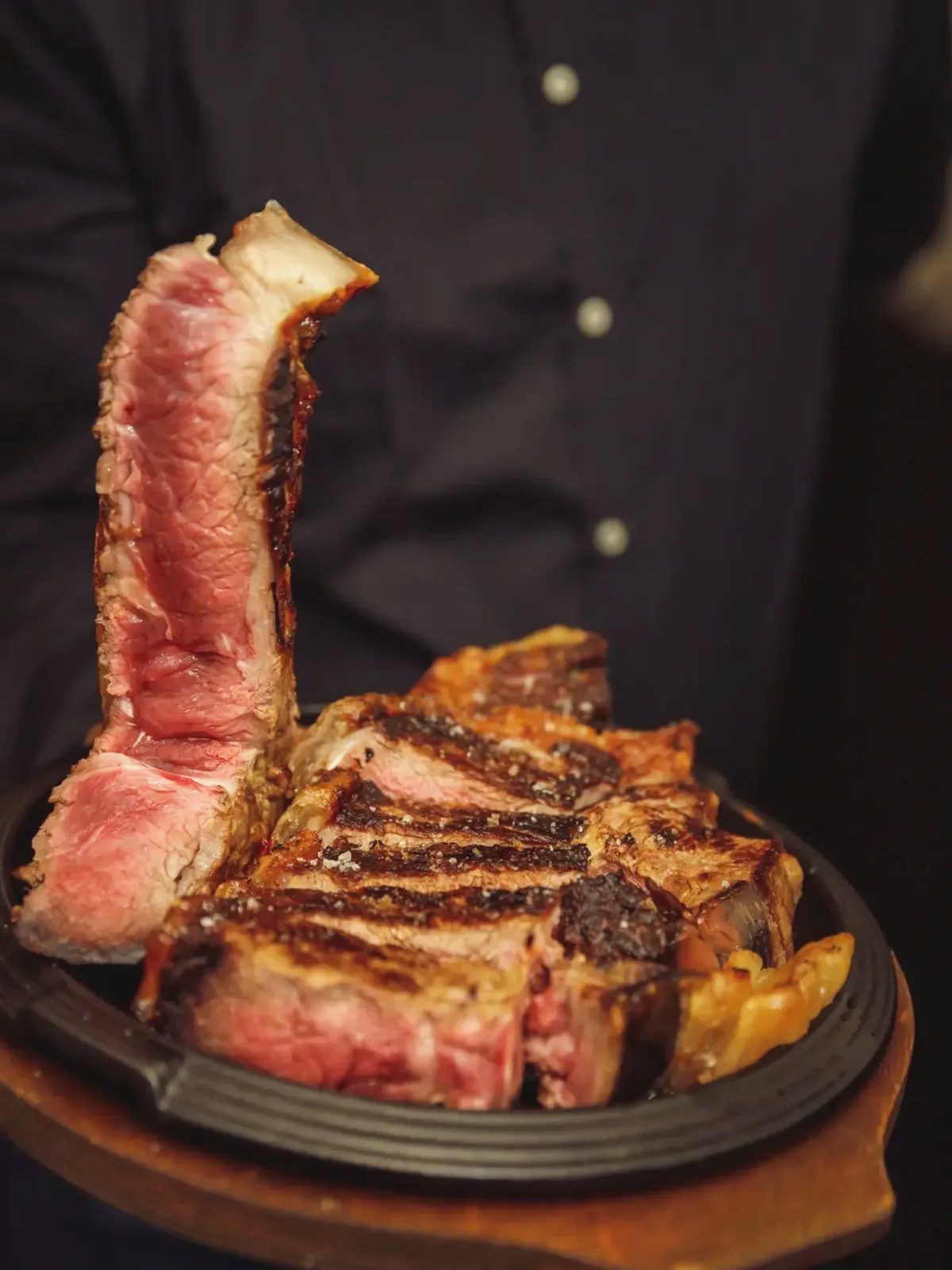
What to eat in Florence, in short
If you are short of time, these are the typical Florentine dishes to try at least once:
- Bistecca alla fiorentina, three fingers thick, grilled and rare.
- Ribollita, the winter soup of black kale, beans and bread.
- Pappa al pomodoro, its summer sister.
- Chicken liver crostini, the starter of every Sunday lunch.
- Peposo, beef cooked for hours in red wine with plenty of black pepper.
- Pappardelle with wild boar, the pasta of the Tuscan hills.
- Lampredotto, the sandwich from the street stalls, the most Florentine street food there is.
- Cantucci and vin santo, to finish.
Below we tell you where they come from, how to recognise them done well and where to eat them.
Where Florentine cooking comes from
Typical Florentine cooking was born poor, in the homes of farmers and craftsmen, where nothing was thrown away. Leftover bread became soup, pulses were everyday meat (Florentines have always been nicknamed “bean-eaters”), and the humbler cuts cooked for hours until they melted in the mouth.
From that kitchen come the rules that still matter today:
- few ingredients, but good ones: Tuscan extra-virgin olive oil, bread, pulses, garden vegetables, meat;
- the season decides the menu: black kale in winter, tomatoes in summer;
- time is an ingredient: embers, slow cooking, soups that taste better the next day;
- Tuscan bread is unsalted, because it goes with full-flavoured dishes.
This simplicity is what makes Florentine food so recognisable: it takes no complicated technique, just respect for what is on the plate.
The typical Florentine dishes not to miss
Bistecca alla fiorentina
The queen of the table. It is cut from the loin, with the T-shaped bone in the middle, fillet on one side and sirloin on the other; tradition wants it from Chianina cattle. It is three fingers thick, often weighs more than a kilo and is shared between two or more people.
It cooks over live embers for a few minutes per side, then standing on the bone, and is served rare: salt and oil come afterwards. One tip: always ask for the weight before it is cooked, because the price is usually per 100 grams.
If you are on your own, at Trattoria Boboli there is also a T-bone for one, about half a kilo, chosen by our chef. Read more about Florentine steak.
Ribollita
A thick soup of black kale, cannellini beans, vegetables and stale bread. The name says it all: it is made the day before and “re-boiled” the next day, when it is even tastier. The right time is winter, once the kale has felt the first cold.
Our ribollita is the usual one, with one difference: the stale bread is gluten free, made in our own workshop. So coeliacs can eat it too. More on our gluten-free ribollita.
Pappa al pomodoro
The summer version of bread soup: ripe tomatoes, garlic, basil, good oil and stale Tuscan bread, cooked into a rustic cream. Eaten lukewarm or at room temperature, it is one of the simplest and best dishes in Florentine cooking.
Chicken liver crostini
“Black crostini” are the Tuscan starter par excellence: chicken livers cooked with onion, capers and anchovies, finished with vin santo and spread on toasted bread. In our restaurants you will find them on the Tuscan board, next to cured meats and pecorino, and on fried polenta.
Peposo
Peposo comes from Impruneta, on the hills south of Florence: the story goes that kiln workers left it to cook for hours at the mouth of the kilns where bricks were fired, including those for Brunelleschi’s dome. It is beef cooked slowly in red wine with garlic and plenty of black pepper, nothing more.
For us it is a family recipe: we tell its story in The historic recipes of Casa Boboli.
Pappardelle with wild boar
Wide egg pasta and a long-cooked wild boar ragù, with red wine and herbs: the pasta that tastes of woods and Tuscan hills. Our fresh pasta is made in the workshop with a 100% gluten-free recipe.
Lampredotto
The most Florentine street food there is: the fourth stomach of the cow, cooked for a long time in a broth of tomato, celery, onion and parsley. It is eaten in a sandwich, with the bread dipped in the broth, green sauce and a little chilli, standing in front of the tripe stalls.
If you are coeliac, take care: the sandwich contains gluten and the stalls serve everything from the same counter, so the risk of cross-contamination is high.
Cantucci and vin santo
Dry almond biscuits to dip in vin santo at the end of the meal. They are from Prato, but in Florence a small glass to close lunch is never missing.
Gluten-free Florentine food: is it possible?
Many typical Florentine dishes are built on bread and flour: ribollita, pappa al pomodoro, crostini, fresh pasta, the lampredotto sandwich. For coeliacs in Florence this often means giving up the best dishes or settling for a version made “on the side”, with the risk of contamination.
At Boboli we made the opposite choice: the whole kitchen is gluten free, in all four places. There is no alternative menu, because it is the starting point of every dish. Bread, fresh pasta, sauces and desserts are made in our workshop, a few steps from Porta Romana. So ribollita stays ribollita, and the whole family eats at the same table, coeliac or not.
All the dishes are on the menu, and there is more in our guide to eating gluten free in Florence.
Where to eat in Florence: the Boboli restaurants
If you are looking for a typical trattoria in Florence, away from the most touristy streets, this is where to find us:
- Trattoria Boboli 1978 Gluten Free, Via Romana 45/R, Oltrarno: our trattoria, a short walk from the Pitti Palace and the Boboli Gardens. For lunch, for the family, for everyday Tuscan cooking.
- Trattoria Boboli Al Bargello Gluten Free by il Gatto e la Volpe, Via Ghibellina 147/R, Santa Croce: an unhurried dinner, among bare bricks and a good glass of wine.
- Trattoria Boboli La Cantina Gluten Free, Via Romana 60/R, Oltrarno: for those who choose the dish starting from the wine, with pairings and tastings.
- Trattoria Boboli To-Go Gluten Free, Via Romana 52, Oltrarno: sandwiches on bread from the workshop, to take away as you walk around Florence.
All four are 100% gluten free.
How to recognise an authentic trattoria in Florence
Not all trattorias are the same. A few signs to choose well:
- the menu is short and follows the season: ribollita in winter, pappa al pomodoro in summer;
- steak is sold by weight, with the price per 100 grams clearly written;
- besides the famous dishes there are the homely ones: peposo, chicken livers, tripe, soups;
- Florentines sit at the tables too, especially at lunch;
- nobody calls you in from the door and the menu is not translated into ten languages with photos of the dishes;
- you walk a few streets away from the Duomo: the Oltrarno and Santa Croce are the districts where people still eat the old way.
If you are planning your trip, read Visiting Florence between art and food too: an itinerary through the museums with the right stops to eat.
At the table
Florentine cooking does not rely on elaborate techniques, but on the quality of the ingredients and respect for tradition. Every dish tells of farming culture, the season and a passion for good food, and it is the most direct way to get to know the city.
All that is left is to book, sit down and let the flavours of Florence win you over.
Frequently asked questions
What is the typical dish of Florence?
The most famous is bistecca alla fiorentina, grilled over embers and served rare. But ribollita, pappa al pomodoro, chicken liver crostini, peposo and lampredotto, the city's favourite street food, are just as Florentine.
What is the difference between ribollita and pappa al pomodoro?
Both are stale-bread soups. Ribollita is a winter dish with black kale, cannellini beans and vegetables, reheated the next day. Pappa al pomodoro is a summer one: ripe tomatoes, garlic, basil and oil, served lukewarm.
Can I eat Florentine food gluten free?
Yes. At Trattoria Boboli the whole kitchen is gluten free, in all four places: ribollita is made with gluten-free stale bread and the fresh pasta comes from our own workshop, so the traditional dishes stay what they have always been.
Where can I eat typical food near the Pitti Palace?
On Via Romana, the street from Piazza Pitti to Porta Romana: Trattoria Boboli 1978 Gluten Free at 45/R, Trattoria Boboli La Cantina Gluten Free at 60/R and Trattoria Boboli To-Go Gluten Free at 52, for a sandwich to take away.