Stories · Family recipes
The historic recipes of Casa Boboli: peposo, ribollita and family flavours
Some recipes belong to a memory before they belong to a kitchen. This is the story of the family dishes we serve at Trattoria Boboli: peposo cooked in Chianti, ribollita, duck ragù. All 100% gluten free.
A family story
Trattoria Boboli comes from a family story and from a vision that looks ahead without losing its roots.
Its origins are tied to Luciano and Clara, Michael’s parents. Luciano was first a butcher and then a restaurateur; Clara was the central figure of a path built on work, hospitality and a deep culture of the table. Some of the dishes we serve today are inspired by Michael‘s first tastes in his parents’ osteria: flavours he still wants to celebrate, with respect and a contemporary touch.
At the heart of it all are the historic recipes of the Florestani family, kept over time as a heritage of taste, memory and Tuscan tradition. They are not just preparations: each dish speaks of a land, of gestures handed down and of slow time.
Peposo: the symbol of Tuscan cooking
Peposo is one of the oldest and most characteristic dishes of Tuscany. It comes from Impruneta, on the hills south of Florence, the town of terracotta kilns. The story goes that the kiln workers put the meat to cook in an earthenware pot at the mouth of the kilns and left it there for hours while they worked. Among those bricks, tradition says, were the ones for the dome of Santa Maria del Fiore, and peposo is said to have been the dish of Brunelleschi’s workers.
The recipe is essential, almost bare: beef, red wine, garlic, black pepper and time. The generous pepper gives the dish its name and once helped preserve the meat. The result is a dark, deep stew that melts in the mouth.
Our peposo
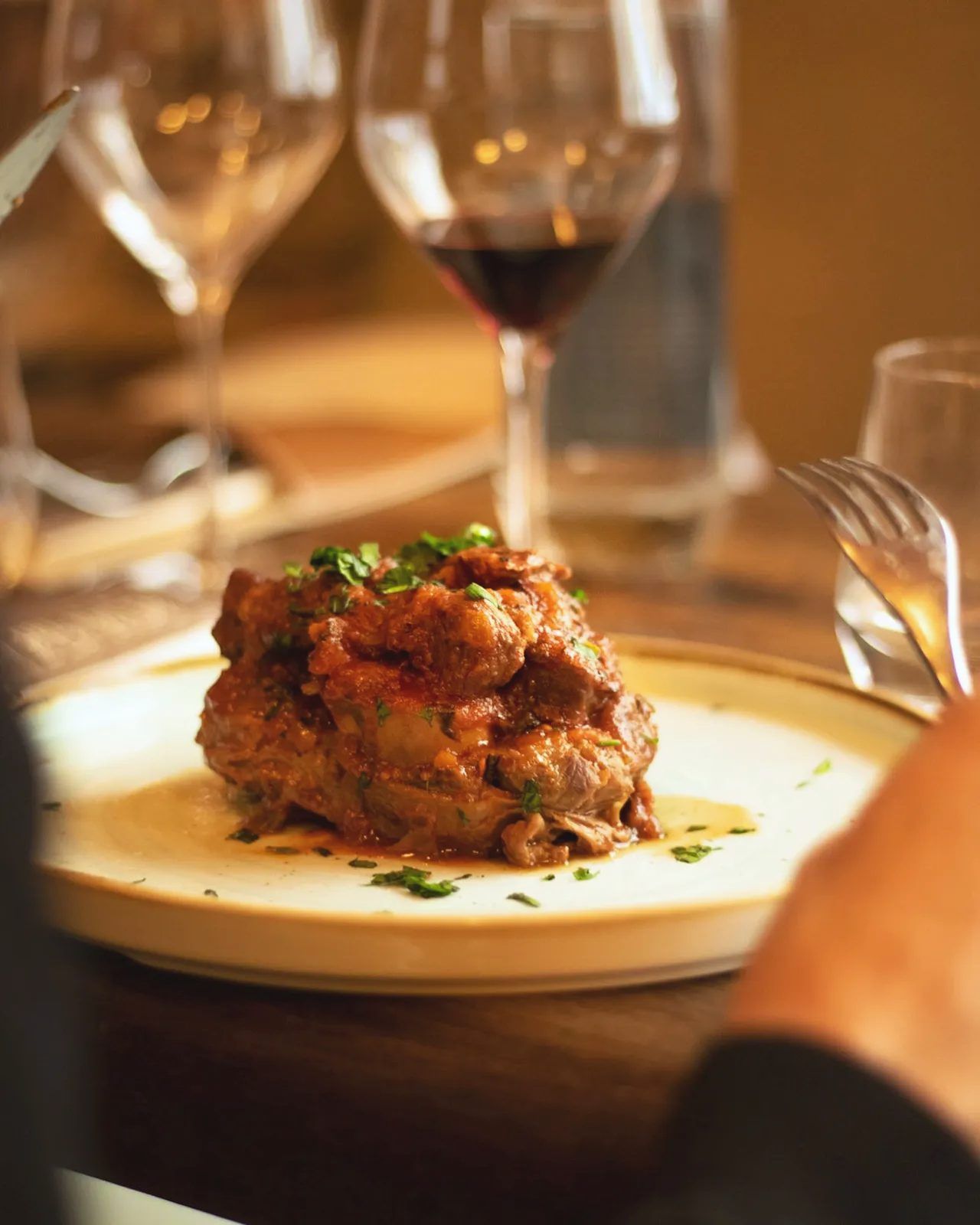
At Boboli, peposo follows the family recipe: beef shin cooked in our Chianti, with garlic and black pepper, until the meat is tender and the wine turns into a thick sauce. We call it “the queen of the osteria”, and you will find it in several forms:
- peposo, as a main, with roast potatoes;
- pici al peposo, our historic family recipe: fresh pici from the workshop tossed in peposo sauce;
- the crostino with peposo extract, on the Tuscan board;
- fried polenta with peposo sauce, in the polenta tasting.
Traditional peposo, in short
If you want to try it at home, here is the traditional version in a few lines:
- Cut about a kilo of beef shin into large pieces and put it in an earthenware pot.
- Add six or seven whole garlic cloves and two tablespoons of black peppercorns, roughly crushed.
- Cover the meat with Tuscan red wine, such as a Chianti.
- Cook on the lowest heat, covered, for four or five hours; if it dries out too much, add a little wine.
- Salt only at the end.
No flour, no tomato: it is a naturally gluten-free dish. Just watch what you put next to it.
Ribollita, remade gluten free
Peposo and ribollita tell the story of the most authentic Tuscany: slow time, simple gestures and deep flavours. Ribollita, though, has a problem for coeliacs: it is made of bread.
That is why we brought it back to the table in a 100% gluten-free version, without losing the character of tradition: gluten-free stale bread from our workshop, black kale, cannellini beans and seasonal vegetables. The recipe is the usual one; only the bread changes. Read more about our gluten-free ribollita.
To find out more about the other typical dishes, read our guide to Florentine food.
Sugo di nana
In Florentine, nana is duck. Sugo di nana is a slowly cooked, intense duck ragù that Tuscan families made for special occasions. With us it dresses fresh pappardelle made in the workshop: wide, flat pasta designed for rich sauces.
From family recipes to the workshop
New strength came to this heritage with the arrival of the new partner from Rinomata Ditta Bellini, who brought decisive organisational and production skills to the project. Thanks to this contribution, the family recipes live on through selected producers and a workshop where tradition and research meet every day.
It is there, a few steps from Porta Romana, that all our pasta is made: through study and research we developed an exclusive 100% gluten-free recipe, designed to give all the taste, texture and pleasure of the best traditional pasta. Pici, pappardelle, mezze maniche: each shape is chosen for its sauce. More on our gluten-free fresh pasta.
At the workshop you can also take home some of our best-loved specialities, such as jarred peposo and ribollita.
Where to taste the recipes of Casa Boboli
The family recipes are on the restaurant menu and you will find them in three places, all 100% gluten free:
- Trattoria Boboli 1978 Gluten Free, Via Romana 45/R, Oltrarno;
- Trattoria Boboli Al Bargello Gluten Free by il Gatto e la Volpe, Via Ghibellina 147/R, Santa Croce;
- Trattoria Boboli La Cantina Gluten Free, Via Romana 60/R, Oltrarno.
Every dish is a journey into real Tuscan cooking. We look forward to seeing you at the table.
Frequently asked questions
What is peposo?
A beef stew cooked for hours in red wine with garlic and plenty of black pepper. It comes from Impruneta, near Florence, and is one of the oldest dishes in Tuscan cooking.
Is peposo gluten free?
In the traditional recipe, yes: beef, wine, garlic, pepper and salt, no flour. Watch what comes with it, though, such as bread or fried polenta. At Trattoria Boboli the whole menu is gluten free, sides included.
What is sugo di nana?
"Nana" is the Florentine word for duck. Sugo di nana is a slow-cooked duck ragù, typical of the Tuscan tradition: at Boboli it dresses fresh pappardelle made in our workshop.
Where can I buy Boboli's peposo?
At the Boboli workshop, a few steps from Porta Romana, you can buy some of our specialities, such as jarred peposo and ribollita. Ask the staff which products are available.